
By Saim | Last updated: September 2026
My aunt has had cats her whole life, probably nine or ten over the decades, and she told me something once that I still think about — she said the hardest part of owning a cat isn’t the litter box or the vet bills, it’s that they’re basically professional liars when it comes to feeling bad. A dog limps and you know instantly. A cat can be quietly falling apart for weeks and still show up for dinner acting like nothing’s wrong. So you end up needing to actually know your cat, not just glance at them and assume everything’s fine because they’re still eating.
This isn’t going to be a scary list of symptoms that makes you panic every time your cat sneezes once. It’s more about building a real picture — what does a genuinely healthy cat actually look like day to day, and what does it look like when something’s shifted, sometimes in ways so small you’d miss them if you weren’t paying attention.
What a Healthy Cat Actually Looks Like
Start here, because honestly most people never really stop to define this. They know their cat, sort of, but they haven’t actually catalogued what “normal” means for that specific animal.
A healthy cat’s coat has a certain look to it — not glossy like a magazine ad, just smooth, mostly untangled, without bald patches or greasy clumps. Cats groom themselves constantly, and a coat that’s maintained tells you the cat feels well enough to bother. That sounds like a small thing. It’s not. Grooming takes energy and comfort, and a cat that’s hurting somewhere often just… stops. Not completely, usually, but enough that you’d notice if you looked closely.
Eyes should be clear, no discharge crusting in the corners, no cloudiness over the actual eye itself. A healthy cat’s eyes track movement, they’re curious, there’s an alertness there even when the cat’s half asleep on the couch. The nose is usually a little damp, not dripping, not crusty.
Appetite in a healthy cat is consistent for that particular cat. I say “for that particular cat” because some cats are just naturally dainty eaters and others inhale their food like it’s about to be repossessed, and both can be totally normal — what matters is whether it’s consistent with their own baseline, not some universal standard.
Energy levels follow a pattern too. Most cats have bursts — the classic evening zoomies, a period of intense play, then long stretches of sleep, because cats sleep an enormous amount, something like 12 to 16 hours a day is completely normal and not a sign anything’s wrong. The key word there is pattern. A healthy cat’s energy is predictable in its unpredictability, if that makes sense. You kind of learn the rhythm.
Litter box habits matter more than people think about until something changes. A healthy cat urinates and defecates regularly, without straining, without excessive vocalizing in the box, and the output itself — yes, we’re talking about this — looks fairly consistent in color and consistency over time.
Weight stays roughly stable. Not frozen exactly, small fluctuations happen, but no steady climb or steady drop that you can feel when you run your hands along their sides.
And then there’s just… vibe, for lack of a better word. A healthy cat has a certain presence. They come find you sometimes. They react to sounds, to you coming home, to a bag rustling in the kitchen. There’s an engagement with the world that’s hard to put into a checklist but that you recognize instantly once you know your specific cat.
Where Things Start to Diverge
Here’s the thing about sickness in cats — it rarely announces itself. It creeps in sideways. So rather than a list of dramatic red flags, it helps more to think about it as: here’s healthy, and here’s the same category, but shifted.
Take grooming again. A sick cat’s coat often goes from smooth to just slightly off — a little greasy, maybe some minor matting starting in spots they’d normally keep clean, sometimes dandruff-like flaking that wasn’t there before. It’s not dramatic. Nobody’s going to look at a slightly ungroomed cat and think “call the vet immediately.” But it’s information. The cat’s telling you, in the quietest possible way, that self-care has slipped down the priority list because something else is taking up their energy.
Eyes shift too, sometimes in ways that are easy to write off. Discharge that wasn’t there before, even if it’s minor. A third eyelid that’s more visible than usual — cats have this extra membrane in the inner corner of the eye, and when it’s showing more than a sliver, that’s often one of the more reliable “something’s not right” signals, even when everything else about the cat seems fine on the surface.
Appetite changes are probably the one people notice fastest, and for good reason, though it’s worth knowing they can go either direction. Eating less is the obvious one — skipping meals, sniffing food and walking away, taking way longer to finish than usual. But increased appetite matters too, and gets overlooked constantly, because who complains about a cat that suddenly wants to eat more? Turns out, a genuinely ravenous appetite that’s new can point toward things like an overactive thyroid, especially in older cats, so “eating more than usual” isn’t automatically good news the way it sounds.
Energy is where the contrast against that “healthy pattern” really shows up if you’ve actually been paying attention to your specific cat’s normal rhythm. A sick cat’s sleep starts tipping from “a lot, but with real active bursts mixed in” toward just… a lot, full stop. Less play-initiated by the cat. Less of that evening burst. More time in one spot, sometimes tucked away somewhere they don’t normally hide, which itself is a pattern worth knowing — cats who feel vulnerable because they’re not well often seek out smaller, more enclosed, less exposed spots than their usual lounging spaces.
Litter box changes deserve real attention because they can point toward genuinely urgent stuff, not just mild digestive upset. Straining to urinate, especially in male cats, going in and out of the box repeatedly without much actually happening, vocalizing while trying to go — this combination specifically can mean a urinary blockage, and that’s not a “let’s watch it for a day” situation, that’s an emergency, full stop, because it can become life-threatening within a day or so if it’s a true blockage. Diarrhea, constipation, blood in urine or stool, sudden changes in frequency — all worth noting even when they seem minor individually.
Weight is sneaky because it moves slowly enough that you can miss it just by looking, especially with a cat you see every single day — your eyes adjust gradually and you stop noticing. This is genuinely one of the better arguments for actually running your hands along your cat’s ribs and spine now and then, not just eyeballing them. You should feel ribs without a lot of pressure, but not see them prominently. A change here, felt rather than seen, often shows up before anything else does.
And that vibe thing I mentioned earlier — it changes too, and it’s honestly one of the harder things to describe but easiest things to sense if you know your cat. Less coming to find you. A kind of flatness, for lack of a better word. Not necessarily dramatic lethargy, just… less there, somehow, even when they’re technically awake and in the room with you.
A Few Specific Comparisons Worth Knowing
Breathing. Healthy: quiet, steady, you basically never notice it unless you’re specifically watching for it. Sick: any open-mouth breathing (cats almost never pant the way dogs do, so this is a real flag), rapid breathing at rest, or noticeable effort — these need attention fast, not a wait-and-see approach.
Gums. Healthy: a healthy pink color, and when you press gently, the color should return within about a second or two. Sick: pale, white, bluish, or yellowish gums, or color that’s slow to return after pressing, all point toward something that needs a vet, sometimes urgently.
Vocalization. Healthy: normal meowing that fits the cat’s usual personality, whatever that happens to be. Sick: a notable increase or decrease from that baseline, or a different-sounding vocalization — something described by a lot of owners as more urgent or distressed-sounding than the cat’s typical meow.
Hiding. Healthy: cats hide sometimes, that’s just cat behavior, especially if they’re naturally a bit shy. Sick: a sudden shift from a normally social, present cat to one who’s suddenly hiding far more than usual is the kind of change worth flagging, even without an obvious physical symptom attached to it yet.
Why the Comparison Approach Actually Helps
Part of why I wanted to frame this as sick-versus-healthy rather than just a symptom checklist is that checklists alone don’t account for the fact that every cat’s baseline is different. A naturally lazy, sleepy cat and a naturally hyper, into-everything cat require completely different reference points for “something’s off.” If you only know the generic list of sick-cat symptoms without knowing what healthy actually looks like for your specific cat, you’ll either panic over normal quirks or miss real changes because they don’t match some textbook description.
When to Stop Comparing and Just Call the Vet
The real skill here, if you want to call it that, isn’t memorizing symptoms. It’s paying enough ordinary, everyday attention to your own cat that shifts actually register. Not obsessive monitoring — just genuine familiarity, the kind that builds naturally if you’re around your cat regularly and actually looking, not just glancing.
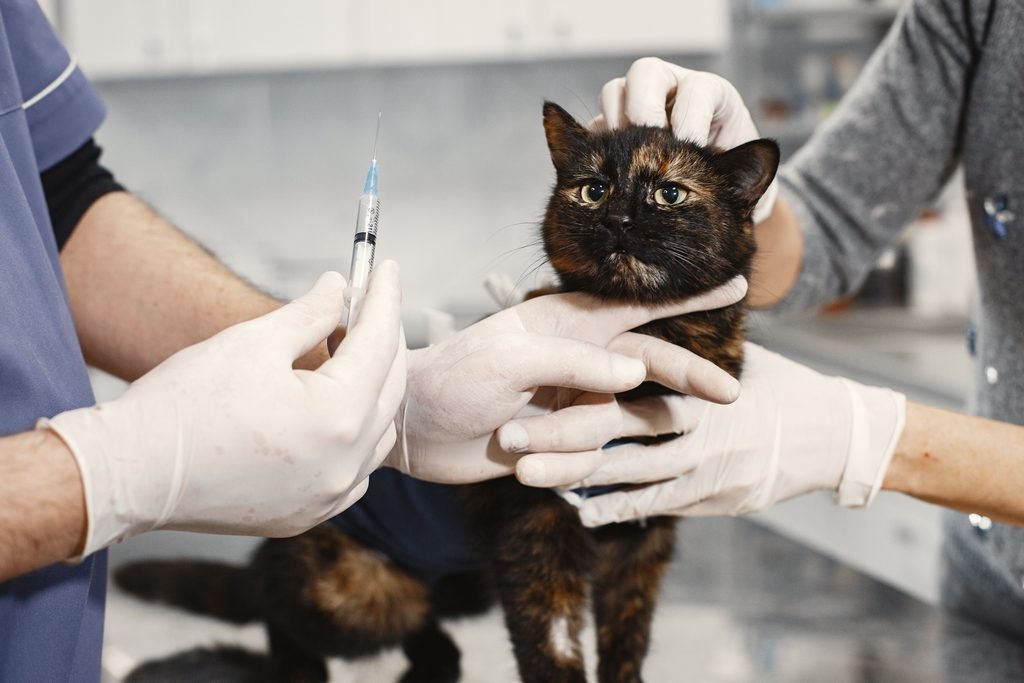
Some things skip the whole “let’s watch and compare” process entirely. Difficulty breathing. Straining to urinate with little or nothing coming out. Repeated vomiting, especially with other symptoms layered on. Seizures. Sudden collapse. Visible blood anywhere it shouldn’t be. Extreme lethargy where the cat barely responds. Pale or white gums. Any kind of trauma, like a fall or being hit by something.
None of those are “monitor for 24 hours” situations. Those are same-day, sometimes same-hour, vet visits.
For the subtler stuff — the coat that’s slightly off, the appetite that’s shifted a little, the energy that feels a touch lower than usual — those are the ones where actually knowing your cat’s healthy baseline matters most, because they’re easy to dismiss individually but genuinely meaningful when you notice several stacking up together over a few days.
Bottom Line
The difference between a sick cat and a healthy one usually isn’t dramatic, at least not at first. It’s a shift — a slightly duller coat, a little less interest in food or play, a change in how much they’re hiding, a litter box habit that’s not quite what it used to be. None of it screams for attention the way a limping dog does. It just quietly changes, and the only way to actually catch that is by genuinely knowing what normal looks like for your specific cat in the first place.
Trust that knowledge more than any generic list, including this one. You’ve watched your cat eat, sleep, groom, and just exist in your house for however long you’ve had them. That familiarity is worth more than a checklist, and when something in your gut says this doesn’t feel right, even without a textbook symptom to point to, that instinct is usually worth listening to.
This article is for general informational purposes and is not a substitute for professional veterinary advice. If your cat shows signs of serious illness or you’re ever unsure, contact your veterinarian rather than relying solely on general guidance like this.