By Saim | Last updated: August 2026
My grandmother let her cats roam free her entire life, no exceptions, and would’ve laughed at the idea of keeping a cat “trapped” indoors. My own cat’s never set a paw outside except for vet visits, and honestly, she seems perfectly content. Two completely different approaches, both coming from people who genuinely love their cats. This debate gets surprisingly heated online, more than you’d expect for something that should just come down to what’s actually best for your specific cat and your specific situation.
Let’s actually look at the real trade-offs here instead of just picking a side.
The Case for Indoor Cats
Lifespan is the biggest factor, honestly. Indoor cats generally live significantly longer than outdoor cats, largely because they’re not exposed to the risks that come with being outside unsupervised — traffic, predators, fights with other animals, exposure to diseases from other cats, and accidental poisoning from things like antifreeze or pesticides.
Reduced disease exposure. Outdoor cats have much higher exposure to diseases like feline leukemia and FIV, often transmitted through fights or close contact with infected cats. Indoor cats, especially in single-cat households, have dramatically lower risk here.
No traffic risk. This one seems obvious but it’s genuinely one of the leading causes of death for outdoor cats, especially in areas with any real amount of car traffic. Even cats who seem “street smart” get hit.
Protection from predators. Depending on where you live, outdoor cats can be at risk from coyotes, larger birds of prey, dogs, and other wildlife. This risk varies a lot by location, but it’s real in a lot of areas people don’t necessarily expect.
No unwanted litters. An unspayed outdoor cat, or one who occasionally gets outside, contributes to the broader stray and feral cat population issue in a lot of areas.
Environmental impact on local wildlife. This one doesn’t get talked about enough — outdoor cats, even well-fed ones, kill a significant number of birds and small mammals annually just from natural hunting instinct, which has real ecological consequences in a lot of areas.
The Case for Outdoor Access
Natural behavior and enrichment. Outdoor cats get to express hunting, climbing, and exploring behaviors in a way that’s genuinely harder to fully replicate indoors, even with a lot of effort toward enrichment.
More exercise, generally. Cats with outdoor access tend to be more physically active simply from the space and stimulation available, which can help with weight management, though this isn’t universally true for every outdoor cat.
Mental stimulation. New smells, sounds, and sights every day provide a level of sensory engagement that’s harder to match indoors, even with toys and window perches.
Worth being honest here though — a lot of what outdoor access provides can actually be replicated indoors with enough intentional effort, which is really the core argument indoor-cat advocates make.
The Middle Ground Options
This isn’t actually a strict either-or decision for a lot of owners, and honestly, the middle-ground options solve a lot of the trade-offs on both sides.
Catios. Enclosed outdoor spaces, ranging from simple window-mounted boxes to elaborate multi-level enclosures, let cats experience fresh air, sunlight, and outdoor sensory stimulation without the risks of unsupervised roaming. Genuinely one of the better compromises available if you have the space and budget for one.
Leash and harness walks. Some cats take to this well, others really don’t, but for cats who tolerate it, supervised leash walks provide outdoor time with a level of control that removes a lot of the risk. Takes patience to train a cat for this, usually more than most people expect going in.
Supervised yard time. If you’ve got a secure, enclosed yard, supervised outdoor time while you’re actively present can offer some outdoor benefit while dramatically reducing the traffic, predator, and escape risks that come with unsupervised free-roaming.
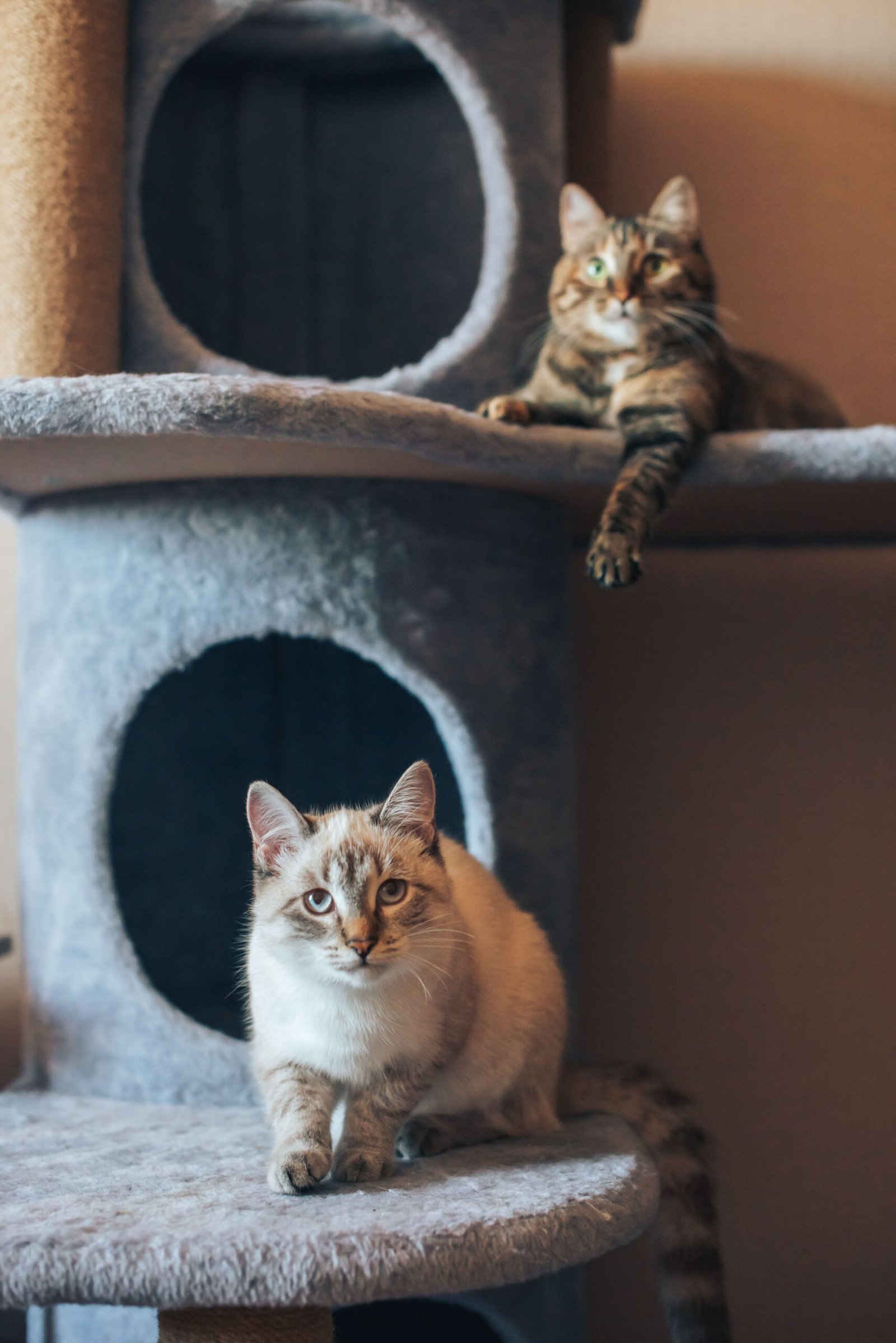
Enriched indoor environments. Cat trees, window perches with a good view, rotating toys, food puzzles, and regular interactive play sessions can genuinely close a lot of the enrichment gap for indoor cats, even if it doesn’t perfectly replicate actual outdoor access.
Making Indoor Life Genuinely Good for Your Cat
If you’re leaning indoor-only, which honestly most vets recommend for the safety reasons above, it’s worth actually putting effort into making that indoor life stimulating, not just safe.
Vertical space matters more than people think — cat trees, shelves, or accessible high spots let cats survey their territory the way they instinctively want to, and a lot of behavior issues in indoor cats trace back to boredom or lack of vertical space rather than the indoor lifestyle itself.
Window access with an actual view, ideally somewhere birds or activity are visible, provides genuine entertainment value that a lot of owners underestimate.
Rotate toys regularly rather than leaving the same ones out constantly. Cats, like a lot of animals, lose interest in things that don’t change, and rotating a stash of toys weekly keeps things feeling fresh without needing to constantly buy new ones.
Food puzzles or slow feeders add mental engagement to something that would otherwise just be a routine, low-stimulation activity.
Actual play sessions, ideally daily, using something like a wand toy that mimics prey movement, matter more than most owners realize for an indoor cat’s overall wellbeing and behavior.
What About Cats Who’ve Always Had Outdoor Access?
Transitioning a cat who’s used to going outside into a fully indoor lifestyle is genuinely harder than raising a kitten indoors from the start, and it’s worth acknowledging that rather than pretending it’s simple.
Do it gradually if possible, reducing outdoor time incrementally rather than cutting it off entirely overnight. Increase indoor enrichment significantly during this transition, since the cat’s going to have more pent-up energy and curiosity than a cat who’s never known anything else.
Expect some vocal protest, at least initially, especially from a cat who’s had years of outdoor access. This usually improves over time as new indoor routines and enrichment become the new normal, though it can take weeks to months for a full adjustment.
There’s No Universal “Right” Answer
Where you live matters a lot here. A cat in a dense urban area with heavy traffic faces very different outdoor risks than a cat in a rural area with a large, quiet, enclosed property. Local wildlife, predator presence, and traffic patterns genuinely change the calculation.
Your specific cat’s personality matters too. Some cats are naturally more anxious or fearful and do better with the predictability of indoor life. Others have a strong prey drive and seem to genuinely struggle with purely indoor confinement, no matter how much enrichment you provide.
Most vets do generally lean toward recommending indoor or supervised-outdoor lifestyles specifically because of the lifespan and safety data, and that’s worth taking seriously as a real consideration, not just an opinion. But the actual right call for your household depends on your specific situation, your ability to provide enrichment, and honestly, what’s realistic for you to maintain long-term.
Bottom Line
Indoor cats generally live longer and face far fewer risks, and that’s a genuinely significant factor worth taking seriously. Outdoor access offers real enrichment and natural behavior expression that’s harder to fully replicate, though not impossible with real effort.
For most owners, the middle ground — enriched indoor environments, possibly supplemented with a catio, leash walks, or supervised yard time — offers a lot of the benefits of both approaches while minimizing the biggest risks. Whatever you choose, the goal’s really the same either way: a cat who’s safe, mentally stimulated, and genuinely content, however that ends up looking for your specific situation.
This article is for general informational purposes. Consult your veterinarian for guidance specific to your cat’s health, temperament, and your local environment when deciding on an indoor, outdoor, or hybrid lifestyle.